Zen and The Art of Motorcycle Maintenance: A Book Review
Zen and the Art of Motorcycle Maintenance isn't about bikes. It's about presence, quality, and why how you do things matters. A review for men who ride and think.
BOOKSENGINESOUTDOORS
There's a feeling most riders know deep in their core but rarely talk about. Somewhere on a long road, with nothing ahead but tarmac, the endless landscape, and the hum of the engine, the mind goes quiet. Not empty, but quiet. You're more alert than you've been all day, but the noise is gone. No tomorrow, no yesterday. Just the road, the machine, the smell of gas, and the particular feel of the air at that speed.
Some books live in that same place.
Zen and the Art of Motorcycle Maintenance is one of them. It has a habit of finding men who ride — and staying with them long after they've stopped.
I'll be honest — I bought this book expecting a maintenance manual with a philosophical twist. Something practical, maybe a little dry. I was wrong in the best possible way.
What Robert M. Pirsig actually wrote is the account of a road trip across America — father and son, two wheels, open country — while quietly dismantling and rebuilding one of the oldest questions in philosophy: what makes anything worth doing well? The motorcycle is almost incidental. It's the frame, not the subject. The real journey happens inside the narrator's head, and it goes much further than any road.
The central idea of the book is what Pirsig calls Quality. He spends a long time trying to define it — philosophically, rigorously, almost obsessively. And the conclusion he reaches is this: Quality is not subjective or objective. It exists before both.
It's what you feel before you think. When the engine sounds right. When the knot holds perfectly. When the coffee comes out exactly as it should. You don't need criteria. You just know when something is just right.
This is not a mystical idea. It's a practical one. Quality is what happens when someone is completely focused and familiar with what they're doing — not rushing toward the result, not distracted by everything else, but fully present in the act itself. It's what separates a good mechanic from a great one. A competent rider from one who flows through corners like water.
You've felt it at some point in your life. The moments when everything clicks, and you stop thinking about what you're doing because you simply are doing it. Pirsig argues that those moments aren't accidents. They're what intention produces. They are the moments that result from practice, from being present hundreds or thousands of times.
One of the most useful things in the book is what Pirsig calls the classical VS romantic divide.
The romantic sees the surface — the beauty, the feeling, the experience. The romantic rides his motorcycle for the freedom, the wind, and the road stretching ahead. He doesn't know how the engine works and doesn't particularly want to. He's there just for the feeling.
The classical sees underneath — the system, the structure, the mechanics. The classical opens the engine and reads it like a text. He understands every part and why it's there, but he doesn't take the same enjoyment from riding as the romantic.
Neither is wrong. But Pirsig's point is that the best relationship with anything — a machine, a craft, a life — requires both. The man who can feel the road and understand the machine beneath him is a different kind of rider. More capable. More present. More connected to what he's doing and why.
This is the kind of man the book is quietly arguing for.
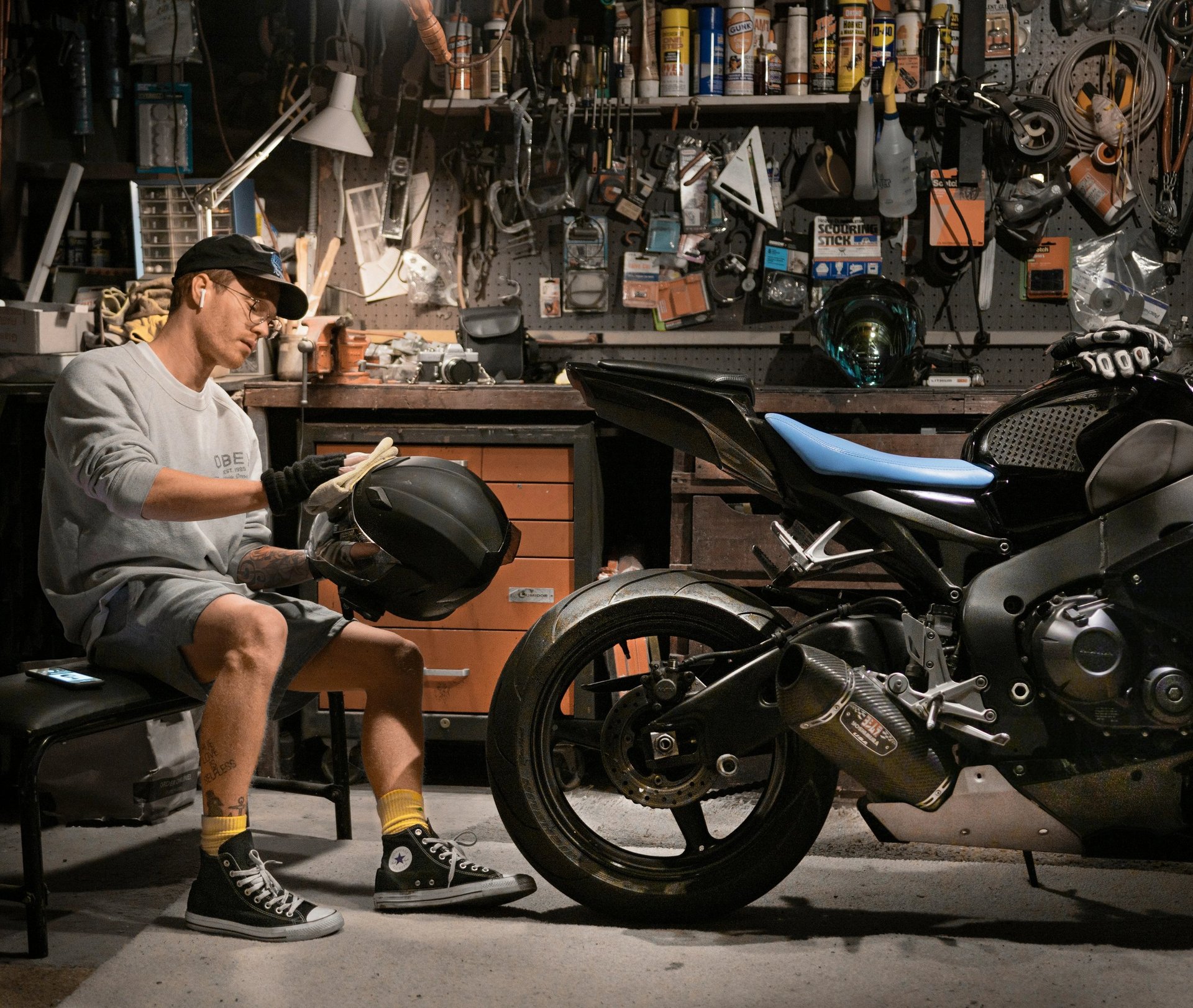
There's a word Pirsig uses that doesn't translate perfectly but lands immediately when you read it: gumption. It's the inner energy that makes good work possible. The quiet readiness you bring to a task when you're in the right state of mind. The right pre-disposition to be successful on a certain task.
When you have it, everything flows. The work feels natural. Decisions come easily. You're inside the process.
When you lose it, everything goes wrong. You force things. You overtighten the bolt. You take the shortcut that costs you twice as long to fix later. You've been there, trying to do something while short on time and with your mind somewhere else. The result? Probably not the best, right?
Pirsig calls the things that drain gumption "gumption traps." Anxiety. Ego. Impatience. The fear of making a mistake. Sound familiar?
The modern world is a gumption trap with good marketing. Everything is designed to pull you out of the present moment — faster, easier, more convenient. And every time you take the shortcut, you lose a little of the capacity to do things well. The capsule instead of the grind. The reel instead of the book. The fish instead of the fish-ing. The result instead of the process.
Gumption, like any form of attention, is something you have to protect.
Underneath all the philosophy, there is a simple and quietly devastating story: a father and a son on a long trip, with a silence growing between them that the father can't seem to close.
The greatest irony of the book is that a man writing about presence spends most of the journey absent from his own son. Too deep inside his own thinking to be fully there for the person riding beside him.
It doesn't resolve neatly. But it makes the book human in a way that pure philosophy never could.
Who should read this, then?
Not everyone. But if any of this sounds like you — if you ride, or work with your hands, or have ever felt the difference between doing something well and doing something fast — this book will give you language for something you already know, and I bet you'll feel somewhat familiar with some of the stories in it.
It's not an easy read, though. Pirsig doesn't rush and doesn't simplify. It's a dense book full of thoughts and information to think about, but it rewards patience in the way that all things done well eventually do.
If it sounds appealing to you, check it out through the link below — it's an affiliate link, and it really helps to grow this project!
Zen and the Art of Motorcycle Maintenance — Robert M. Pirsig
It's the kind of book that sits on the shelf and in the back of your mind. Especially on long roads.
Subscribe to our newsletter
Be a part of the grit lifestyle