Why I Started Making Espresso the Hard Way
What if the best part of making coffee isn't the coffee itself? A personal reflection on manual espresso, slow living, craftsmanship, and why some activities become meaningful precisely because they require time, effort, and attention.
COFFEEBRAND STORYLIFE
6/19/20265 min read
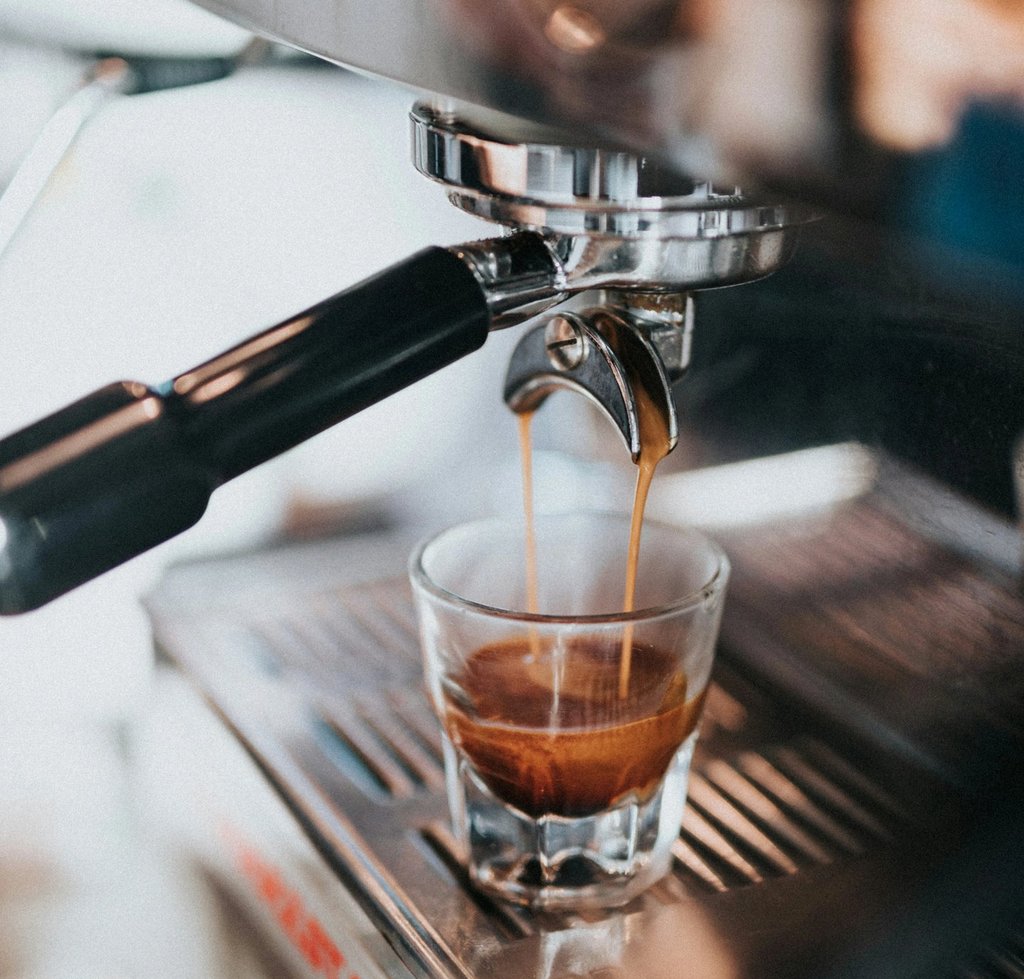
A few years ago I bought a capsule coffee machine. The marketing promised incredible coffee at the touch of a button and to be fair, the coffee was good. The capsules were cheaper than buying coffee outside. The process was fast. It just made sense.
The machine, however, had other ideas.
In its short time in my kitchen it managed to display a water error with a full tank, refuse to recognise capsules it had accepted the day before, and on one memorable occasion, discharge coffee directly onto my kitchen counter rather than into the cup below it. It was efficient in every way except the one that mattered.
That was when I decided to do something I had been considering for a while. I bought a manual espresso machine.
I had watched videos, read a few things, and the logic seemed simple enough at the time: better coffee, more control, and significantly cheaper in the long run. A reasonable decision, made for reasonable reasons.
What I had not fully understood was what I was getting into.
I have always been drawn to process over speed.
I shave with a safety razor, a ritual that turns an unremarkable daily task into something closer to meditation. I prefer old motorcycles and older cars when I have the choice. I prefer to photograph on manual film cameras rather than digital automatics. These are not the most efficient tools by any measurable standard. They are slower, more demanding, and less forgiving of inattention.
That is precisely the point.
Some tools and processes force you to be present, not because they are especially difficult, but because their nature demands a particular quality of attention. They pull you into a kind of focused stillness that is entirely your own. The safety razor requires it. The film camera requires it. The old machinery requires it in a way that a modern version, with all its electronic assistance, does not.
The manual espresso machine gives me exactly that. Presence in a task that, with capsules, had become practical but mindless, something done in automatic mode, between one thing and the next, without ever quite arriving in the moment.
When I first started watching videos about home espresso, I genuinely thought I understood what was involved. You grind the coffee, put it in the portafilter, tamp it down, pull the shot. Straightforward enough.
The first cup I made looked like poisoned water. Dark, thin, and completely wrong.
My first assumption was that I had bought a machine incapable of making good espresso. I had chosen an entry-level model deliberately because I did not know what I was doing and had no intention of spending serious money until I did, but I had not expected it to produce something this bad. So I went back online to investigate.
What opened up in front of me was a world I had no idea existed.
The first discovery was the portafilter. The one that came with the machine was pressurised, designed to compensate for inconsistent grinding by adding pressure artificially. For capsule-style convenience it works. For real espresso, with any attempt at crema or texture, it does not. It works for pre-ground coffee, giving you a quick solution but never a great result.
That said, I ordered a bottomless portafilter and a metal tamper to replace the plastic one that had come with the machine. The plastic tamper compressed the coffee in the centre of the basket but not at the edges, creating channels where the water would find the path of least resistance rather than passing through the grounds evenly.
When the new portafilter arrived, I ground some coffee in the small electric blade grinder I already owned and pulled a test shot. I was excited to try a great espresso made from scratch!
It was worse than the first one.
I was close to returning everything.
I did not give up, which turned out to be the correct decision, though it did not feel that way at the time.
Further research revealed the problem: the blade grinder was incapable of producing grounds fine enough for espresso. Blade grinders chop coffee rather than grinding it, producing an uneven mixture of fine dust and coarse particles that no portafilter can manage consistently. I needed a burr grinder, one that could be adjusted to produce a uniform, fine grind. Not wanting to spend a significant amount on something I was still not sure I could use properly, I bought a small manual burr grinder with an adjustable setting.
The difference was immediate. With the bottomless portafilter, the metal tamper, and the hand grinder, I finally had something worth working with. The extraction was not yet consistent, some shots were better than others and I could not reliably explain why, but there was coffee in the cup that resembled what I had been trying to make.
The next piece of equipment was a calibrated tamper with a preset pressure mechanism, which eliminated the variable of how hard I was pressing on any given morning. Combined with a metal pressure screen placed over the grounds before extraction, the consistency improved considerably.
And then there was the coffee itself. The difference between standard supermarket beans and freshly roasted, artisan-processed coffee is not subtle. The crema, the texture, the flavour, all of it changes. This was the last variable, and the most obvious one. I had been saving it for last because good coffee costs more. It was worth every cent of the difference.
There is one question I still could never fully resolve.
With the capsule machine, coffee took thirty seconds from decision to cup. The manual process, measuring the beans, manual grinding, distributing the grounds evenly in the portafilter, tamping, waiting for the machine to reach temperature, then the extraction itself, takes closer to four minutes. That gap is not going to close. A manual espresso machine will never offer the convenience of a capsule machine. This is simply true.
What it offers instead is something a capsule machine cannot replicate. The opportunity to experiment, to adjust, to understand how different beans respond, how different roast levels behave, how grind size affects extraction time, what happens when you change one variable and hold everything else constant. Four minutes that require your attention rather than thirty seconds that do not.
It became clear, fairly quickly, that this was never really a question of time.
I came across the idea from an unexpected direction: a documentary about Japanese tea culture. The rituals and ceremonies surrounding tea in Japan transform an act of caffeine consumption into something else entirely. In the West, coffee is optimised for speed and effect. Tea is made with a bag and discarded in ninety seconds. In Japan, tea demands a different quality of presence. The preparation is the point, not the consequence. People drink it for the experience of drinking it, not for what it does to them afterwards.
The parallel was immediate. What I had stumbled into with the espresso machine was a version of the same thing. A process that rewards attention. A daily ritual with enough variables to stay interesting indefinitely. Water temperature, grind size, tamper pressure, extraction time, bean origin, roast date. Each shot is an experiment. Some work better than others, and understanding why is part of the practice.
Like any craft pursued seriously, it has generated a community and something that functions as a hobby. Forums, discussions about equipment, the particular satisfaction of a shot that extracts exactly as intended after a week of adjustments. None of this exists with a capsule machine. You press a button, the machine performs, and there is nothing to discuss, nothing to improve, nothing to understand.
The capsule produces good coffee. The manual machine produces an experience, and occasionally, on a good morning with the right beans and the right grind, something close to a perfect cup.
That is what this was always about. Not the coffee itself. The presence required to make it and the effort that makes it even more enjoyable.