Why Central Portugal Is One of Europe's Best Kept Motorcycle Secret
Central Portugal is one of Europe's most overlooked motorcycle destinations. From the winding roads of the Serra da Lousã and the peaks of Serra da Estrela to medieval villages, quiet reservoirs, and empty mountain passes, this local guide explores why the country's interior offers a riding experience that is becoming increasingly rare. Written from the perspective of someone who calls these roads home, it's an invitation to discover a side of Portugal that most travellers never see.
TRAVELENGINES
7/10/20265 min read
Estrada Nacional 236. Twenty-nine kilometres between the centre of Lousã and Coentral.
Twenty-nine kilometres of corners, dense forest, and mountain landscape that has no particular interest in being discovered. This is not a road that appears in motorcycle touring guides. It does not move the same money as Lisbon, Porto, or the Algarve. It is simply there, every morning, with almost no traffic and no particular reason to hurry through it.
Leaving Lousã on a quiet morning, the N236 climbs immediately into the serra. The first few kilometres offer viewpoints over the town and the surrounding valleys — the kind of views that appear suddenly between the trees and disappear just as quickly if you are moving too fast to notice them. The vegetation is dense on both sides, with dirt tracks leading off into the forest at irregular intervals. Some of them go somewhere interesting. Most of them simply go deeper into the trees, which is interesting enough.
Halfway along the road, on the left, the schist village of Candal appears. A handful of dark stone houses built into the hillside, the kind of place that looks like it grew from the rock rather than was placed on it. The Sabores da Aldeia restaurant is here — a pastel and a coffee if you are passing through, a full regional lunch if you have the time and the appetite. The traditional dishes of the Serra da Lousã are cooked well at this table. A short walking trail from the village leads to a waterfall through the forest.
Further along the road, the wind farm of the Serra da Lousã comes into view. Standing beside the turbines does something to your sense of scale — they are large in a way that photographs do not communicate, and the mountain road that connects them is accessible to any vehicle and considerably more enjoyable on a motorcycle than it has any right to be.
Ahead of it rises Alto do Trevim, the highest point of the Serra da Lousã. The views from the summit are considerable at any time of day. At sunset in summer, they are something else entirely.
All of this on a single road. Twenty-nine kilometres that do not appear in any tourist guide because they generate no significant revenue for anyone. No branded experience, no organised tour, no hotel group with a commission arrangement.
Just a road through the Portuguese interior, doing what the Portuguese interior does when nobody is paying attention to it.
There are hundreds of roads like this in central Portugal. The N236 is simply the one closest to where I live.
Tourist guides tend to focus on the same regions of Portugal for good reason. Each of them earns its place.
The Algarve has excellent roads for motorcycle travel — but in summer it has the traffic to match. The coastal routes offer something extraordinary for anyone drawn to the sea, but the landscape can become predictable over distance, one cliff and one beach following another in a pattern that eventually loses its surprise. The Douro is exceptional, but it attracts a very specific kind of traveller — one interested in gastronomy and wine, moving slowly between farms. All of it valid. None of it what a rider looking for empty roads and changing landscape is actually after.
The central interior that this guide covers remains, for now, largely undiscovered. It does not appear in most touring guides. It has not been packaged and sold. And that is precisely what makes it worth riding.
Start with the roads.
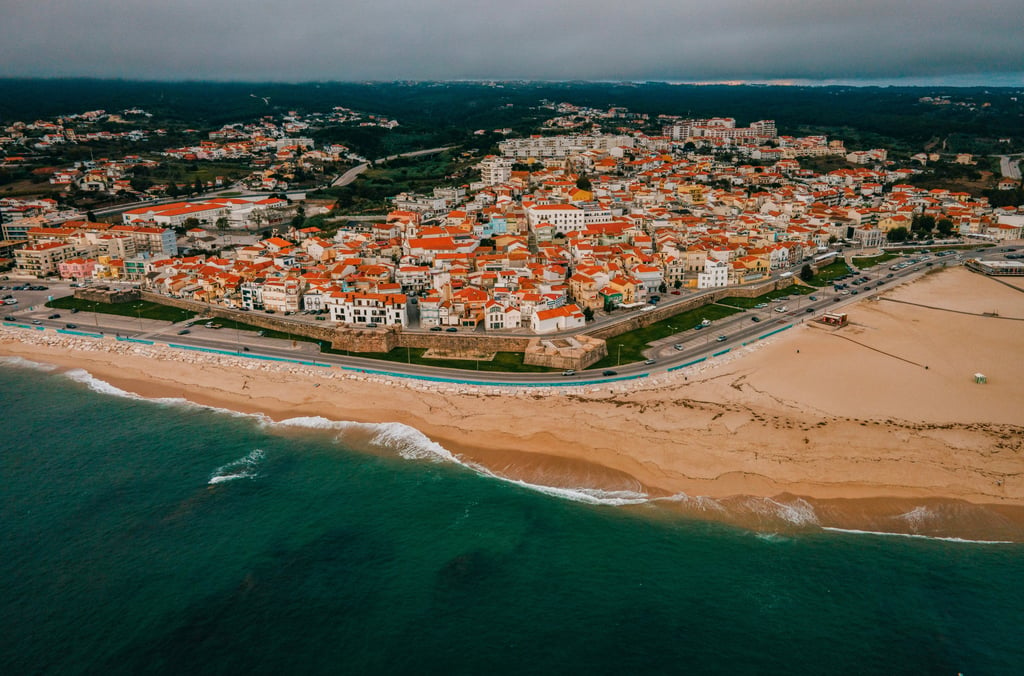
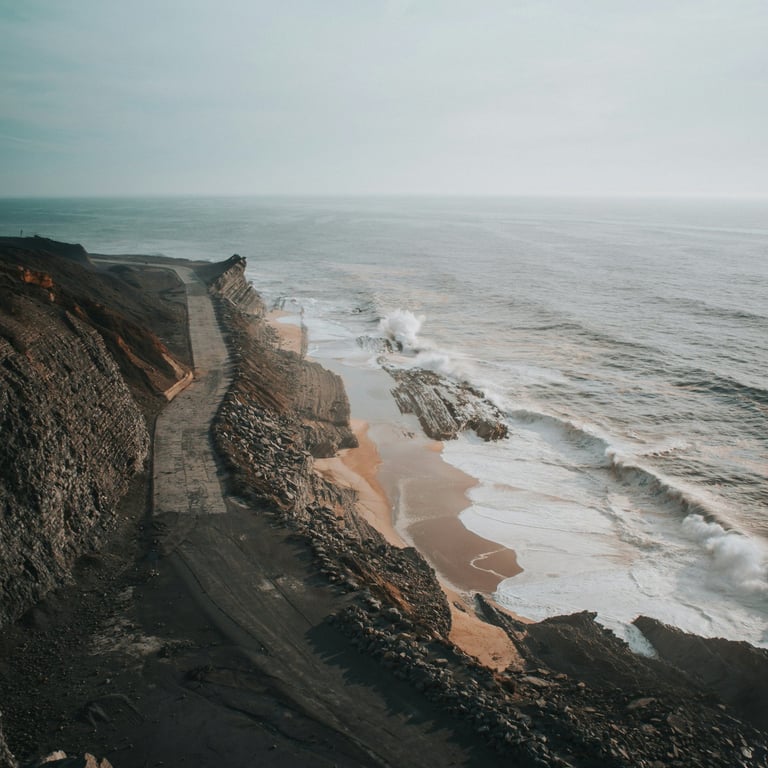
For anyone planning a motorcycle journey, the roads of central Portugal are a world that has not yet been written about with any seriousness. Mountain passes with sustained corners and minimal traffic. National roads in good condition that connect the Serra da Lousã to Alto do Trevim, or carry you up through the Serra da Estrela — the tallest mountain in mainland Portugal — without a single queue in sight. Coastal stretches where the Atlantic appears at the end of a straight and stays in view for kilometres. Roads that in France or Spain would have organised touring groups and dedicated infrastructure. Here, they simply exist, largely unclaimed.
Then there is the variety. In a relatively small area, central Portugal contains high mountain ranges, dense pine and schist forest, Atlantic coastline, rivers, glacial valleys, medieval villages built from local stone, and cities that have been inhabited continuously since Roman times. You can leave the mountains in the morning, stop at a viewpoint with views that extend to the horizon in three directions, and be drinking something cold on a beach watching the sun go down at the end of the same day. The distance between these experiences is not large. The contrast between them is.
Finally — and this is the advantage that disappears the moment a place becomes well known — the roads are quiet and the attractions are accessible without the infrastructure of mass tourism surrounding them. No queues. No organised groups moving through in sequence. No branded experience designed to process visitors efficiently. The schist villages of the Serra da Lousã, the medieval walls of Sortelha, the Roman tower outside Belmonte — you arrive, you look, and you leave on your own terms.
This will not always be the case. Places this good at being themselves do not stay undiscovered indefinitely.
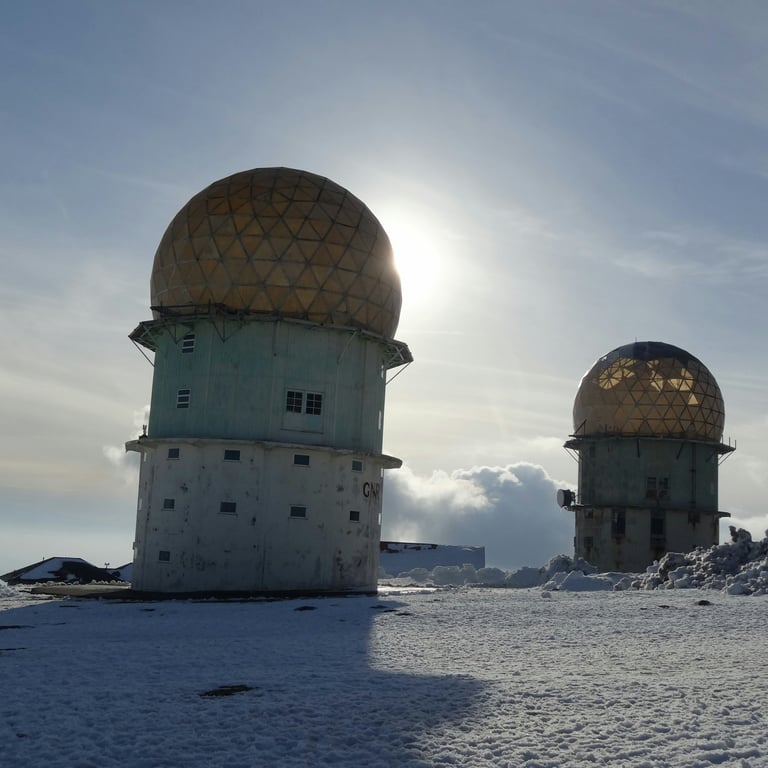
There are places worth spending an entire day exploring and others that ask only for a brief stop before the road calls again. Central Portugal has both. The Serra da Lousã remains the obvious starting point, with its schist villages and some of the finest riding roads within easy reach of Coimbra. The Serra da Estrela offers the highest road in mainland Portugal, where the landscape changes with every kilometre of altitude. Around the Aguieira Dam, quiet roads circle the water through forests and small villages that rarely appear on anyone's itinerary, making it a quiet fishing and offroading spot. Sortelha has survived the centuries with remarkably little interference, its medieval streets and granite walls still feeling more lived in than preserved. The Serra da Malcata is one of the quietest corners of the country, known for its nature reserve, empty roads, and the possibility — however small — that the Iberian lynx is somewhere nearby. Then there is Viseu, a city that receives far less attention than it deserves, combining history, good food, and the kind of relaxed atmosphere that makes it difficult to leave on schedule.
I write about these places from a slightly unfair position. I live in Coimbra. These are not destinations I discovered while researching an article or following someone else's itinerary. They are roads I have ridden repeatedly, places I return to because they remain worth returning to. The Serra da Lousã has been on the horizon for as long as I can remember. Many of these villages are where weekends begin when there is no particular plan beyond filling the motorcycle tank and seeing where the day ends. That changes the way you see a region. You stop looking for attractions and start noticing the small details that make a place worth revisiting long after the photographs have been taken.
Perhaps that is why central Portugal has managed to remain one of Europe's best motorcycle secrets. It has never tried very hard to become anything else. The roads were built to connect villages, not entertain riders. The mountains existed long before anyone thought of calling them destinations. And because so few people are talking about them, they still offer something that has become increasingly difficult to find elsewhere: the feeling that you have discovered them yourself. The best roads in Europe are the ones nobody put on the map yet. For now, central Portugal is still one of them.