The Teams Nobody Watches: What Following a Lower League Football Club Says About You
When Académica de Coimbra were promoted to the second division on the 26th of May, 26,000 people filled a stadium that once hosted Euro 2004, breaking the venue's attendance record. This is the story of a historic club, a city in decline, and the small group of supporters who never stopped showing up. What lower league football actually means, and what it says about the people who follow it.
SPORTSHISTORYLIFE
5/29/20265 min read
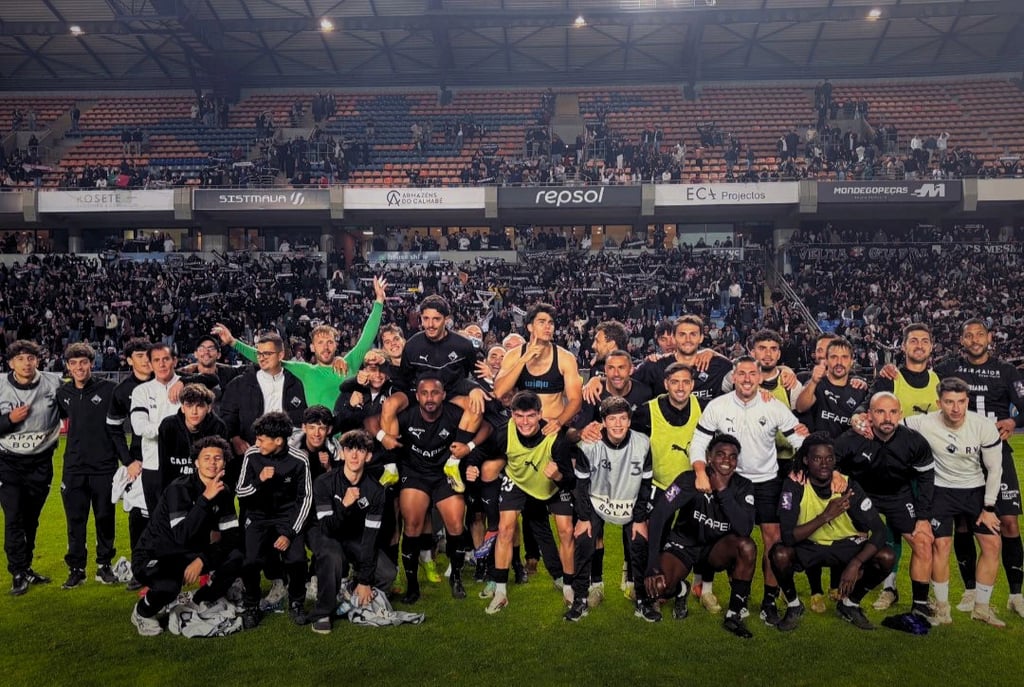
26th May 2026. Coimbra, Portugal.
The stands of the Estádio Cidade de Coimbra shook under the feet of more than 26,000 supporters. The scoreboard read 3–0. And at the 91st minute, the referee's whistle confirmed what the result had been saying all along. That something was being reborn here, in this small and increasingly sleepy and old city.
Four years after their relegation, Académica de Coimbra were back in the second division of professional football.
What does this mean for a city like Coimbra?
The Estádio Cidade de Coimbra has hosted Euro 2004 matches. It has seen UEFA Europa League nights, top-flight football and international fixtures. But the record attendance was set last Saturday. In a third division match.
Not a European final. Not a title decider in the top flight. A promotion match in the third tier of Portuguese football.
That number tells you everything about what Académica means to this city that no trophy cabinet ever could. People don't turn out in record numbers for glory. They turn out for belonging. For the feeling that something happening on a patch of grass on a Saturday afternoon is theirs. Not a product, not a brand, not a television event. Theirs.
Coimbra is a university city, historically proud and increasingly hollowed out by the slow drift of people toward Lisbon and Porto. The kind of city that feels its own decline more so than most, because it remembers so clearly what it once was. On Saturday, for 91 minutes, it remembered again.
Académica is not just a football club. It is an institution woven into the fabric of Coimbra, into its streets, its university, its identity.
It began as the Associação Académica de Coimbra, a student association representing the academic community in sport and cultural life. Over time, as football grew into something larger than student recreation, the organisation split, giving birth to the Organismo Autónomo de Futebol, the autonomous football body. The club kept its student identity and its deep ties to one of Europe's oldest universities. But it was no longer just for students. It belonged to the whole city.
The first sign of what Académica could mean came in 1939.
In the inaugural edition of the Portuguese Cup, Académica faced Benfica. A student club from a small university city against a Lisbon giant that would go on to become one of the great names in European football. Académica won.
It was the kind of result that defines a club's character for generations. The underdog who wasn't supposed to win, winning anyway.
The decades that followed confirmed the status. Years in the top flight. Recognisable players. A reputation that extended beyond football. Académica had become associated with the student resistance movements of the Estado Novo dictatorship, their black and white colours carrying a weight that went well beyond sport. They were a club that meant something.
Then came the slow decline.
The early 2010s marked the beginning of a difficult era. Poor management decisions, weak signings, shrinking revenues from diminishing results, financial mismanagement. The kind of institutional decay that doesn't announce itself just accumulating, quietly, until the consequences became impossible to ignore.
Académica dropped to the second division. Then, four years ago, to the third.
For a club with that history, in that city, it was a long way down.
To add to this, the club was not falling alone. The city was falling with it.
Coimbra had been entering its own slow decline. Financial instability, a shrinking job market, no industries generating the kind of capital that keeps a city alive and moving. The young left for Lisbon and Porto, where the opportunities were. The shops closed one by one, and what commerce remained retreated indoors to shopping centres, away from the streets that once gave the city its character. Coimbra became a city of passage, a place that trains doctors, engineers, and lawyers for other cities to benefit from. The university remained, falling into a decay of its own. Everything around it quietly contracted.
In that environment, for a small and faithful group of supporters, Académica became something more than a football club. It became an escape. A reason to gather. A reminder that the city had a soul, even when everything else suggested otherwise.
For those supporters, football was never about trophies.
It was about a local identity that refused to let go, one that showed the outside world what Coimbra actually was, beneath the decline and the empty shopfronts and the slow drain of people southward. Supporting Académica through the lower leagues, through the second division and then the third, was a statement. Not a loud one. A quiet, weekly, stubborn one.
This is what real football looks like, away from the lights and the television money and the lobbying of agents and club presidents. These are players who play because they love the game. Players who grew up dreaming of something more, and who are still chasing it on pitches that nobody watches on television. You cannot tell me a lower league player doesn't dream of higher levels. But it is here, in these divisions, that you see football in its purest form. The love of the game, stripped of everything else.
But faith becomes fragile when it goes unrewarded for long enough.
Coach after coach arrived with promises. Players came and went without leaving a mark of their own. Debts accumulated. The mystery around the club, that particular sense that something special could still happen, slowly faded away. Supporters stopped believing. Promotion started to feel like something that happened to other clubs, not theirs. The dream of returning to professional football began to feel like nothing more than that: a dream.
Then something changed.
A new board of directors. The people who arrived this time came with an intention. A coaching staff with attitude, vision, and a project. Players with the hunger to win, players who could have chosen better-paid situations elsewhere but chose instead to help rebuild a historic Portuguese club. That choice mattered. Supporters noticed.
It was contagious. Watching a group of players and coaches united around a single objective, week after week, match after match, slowly rebuilt what years of disappointment had eroded. And so, on the 26th of May, the Estádio Cidade de Coimbra filled in a way it hadn't in years. 26,000 people. The chants of the supporters echoing across the pitch. A historic promotion, back to professional football, back to the second division.
I was not there though. I should be honest about that. This day was not mine. I have always supported Académica, but from a distance, as a secondary loyalty. My club is Sporting Clube de Portugal. But Académica is the local club, and always worthy of support, and some of my clearest football memories are tied to it. Actually, I’ve seen Académica playing live more times than any other club, including Sporting, by a fair margin.
Going to games with friends. With family. Especially with my father, my grandfather, my brother. Those afternoons in the stands. Ordinary Saturday afternoons that became something else entirely. Not the Champions League matches we watch on television. The small club, the local ground, the family and friends around you. The unremarkable afternoon that turns into a memory you carry for years.
That is what I admire most about the supporters who put their local club above all others. It is not about trophies or European nights. It is about stories. About moments that become embedded in a city and in the people who were present, not just for the promotions, but especially for the relegations.
Anyone can support a club when it wins.
It is in the difficult moments that you find out who the real supporters are.
And sometimes, after years in the lower tiers, after the debt and the disappointment and the coaches who came and went without leaving a mark, the club bounces back. And when it does, it can bring the whole city with it.
That's what happened in Coimbra, Portugal, on the 26th of May when Académica got back to professional football.