The Original Café Racers — How 1950s London Invented Motorcycle Culture
London, 1955. A jukebox, a Triumph Bonneville, and "Rock Around the Clock" playing for exactly 2 minutes and 8 seconds. How a generation with nothing to lose invented motorcycle culture forever.
ENGINESHISTORYMEN'S STYLE
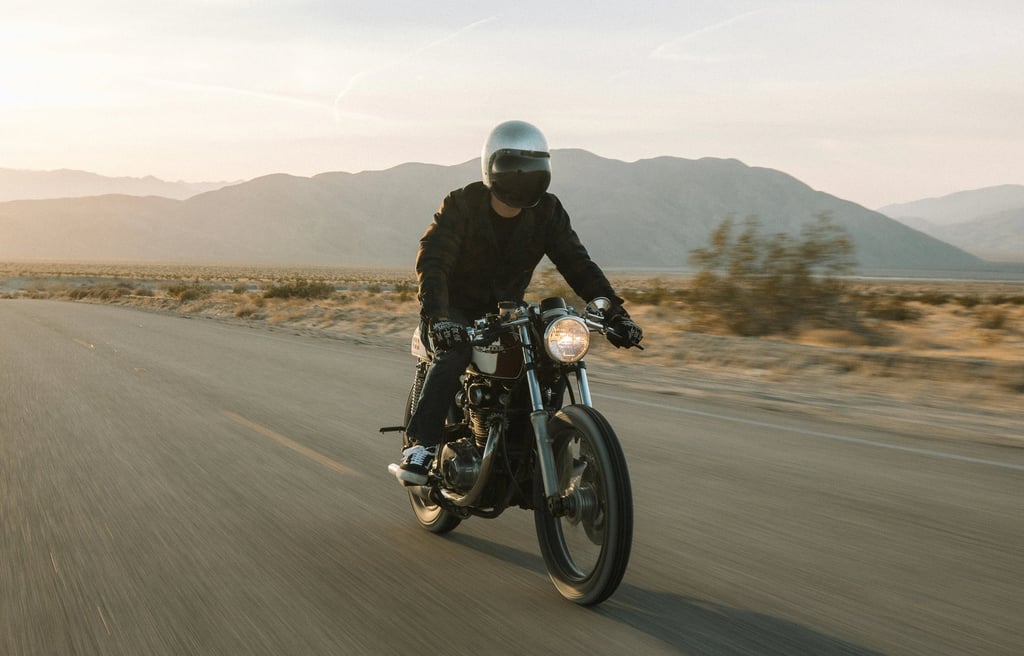
London, 1955. Another cold night.
Outside the Ace Cafe, a young man sits astride his Triumph Bonneville, letting the engine warm up beneath him. Inside, someone drops a coin into the jukebox. The needle finds the groove. Bill Haley & His Comets fill the room.
He has exactly two minutes and eight seconds.
That's how long "Rock Around the Clock" runs — and that's how long he has to twist the throttle, reach the next set of lights, and make it back before the music stops. No prize. No trophy. Just the knowledge that his Bonneville is faster on that stretch of road than anyone else's tonight.
He was a café racer. And he had no idea he was taking part in the beginning of something the rest of the world would still be copying seventy years later.
Despite the victory, post-war England was not a country in celebration. Rationing was still in effect. The weight of a conflict that had consumed an entire generation hadn't lifted — it had simply stopped making noise. The men who came back from the war came back changed. And the young men who hadn't fought inherited a country immersed in hard times.
In London, the reality was simple and hard: there was nothing to do and no money to do it with. No war to fight, no clear future to aim at, and a precariousness that showed no sign of leaving soon.
The motorcycle filled that gap — not by design, but by circumstance. A used Triumph or BSA could be bought with a few months of wages. It was accessible in a way that a car never was. And most importantly: it moved.
At the same time, something was arriving from America. Marlon Brando in The Wild One — released in 1953 — had shown the world what a motorcycle could mean beyond transport. It was rebellion, attitude, and a refusal to accept the life that had been handed to you. The British authorities banned the film, but the youth somehow found out about it anyway.
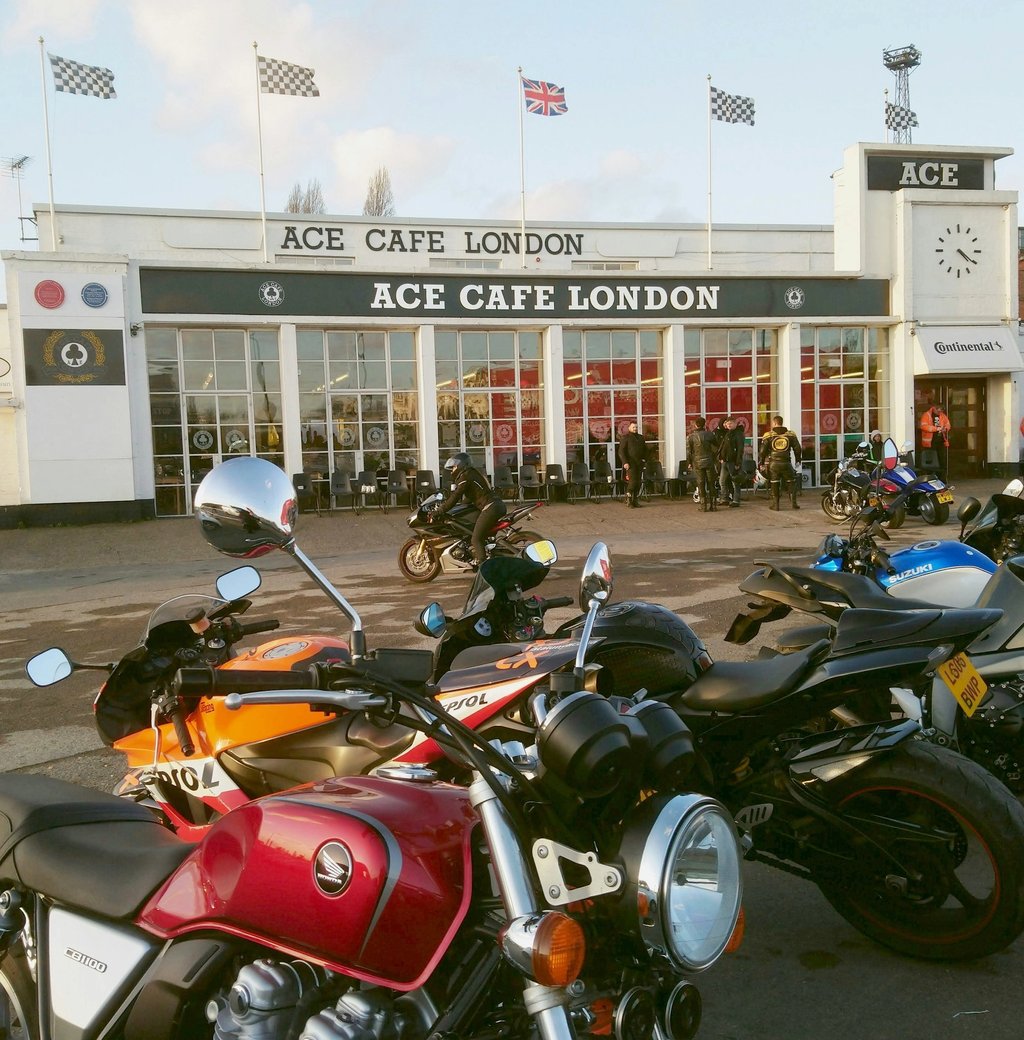
The heart of it all was the Ace Cafe on North Circular Road.
Open twenty-four hours, it became the natural gathering point for night shift workers and young men with fast motorcycles and nowhere particular to be. The jukebox in the corner was the unlikely trigger for what came next.
The concept was simple — someone would drop a coin in, a song would start, and a rider would pin the throttle and try to reach a predetermined point and make it back before the music stopped. No organisation, no rules, no prize. Just a coin, a song, and a few seconds to prove something to nobody in particular.
They called them record races. And they were, in the purest sense, exactly what happens when a generation with too much energy and too little to do finds its own way to feel alive.
For this peculiar form of entertainment, riders turned to the domestic market — and in 1950s England, the domestic market happened to produce some of the most exciting motorcycles in the world.
The factories of Triumph and Birmingham Small Arms (BSA) had spent the war years manufacturing for the military. Now they turned that same precision toward machines built for the road, and the results were formidable.
Two models defined the era and are still sought after by enthusiasts today.
From Triumph came the Bonneville — a twin-cylinder, four-speed engine producing around 46 horsepower, with a top speed of 110 to 120 mph. Fast, agile, genuinely dangerous, and crucially, accessible enough for a young man with a few months of savings and the right kind of ambition.
BSA answered with the Gold Star. A single-cylinder, four-speed machine available in 350cc or 500cc — producing 27 and 42 horsepower respectively — with a top speed of up to 110 mph. Where the Bonneville was refined aggression, the Gold Star was raw and uncompromising. Both were, in the right hands, rocket ships.
But the machines were only the starting point.
Café racers quickly understood that shorter songs meant faster times — and faster times meant stripping every unnecessary gram from the motorcycle. Windscreens came off. Mudguards went. Mirrors, unnecessary lights, anything that added weight without adding speed were removed. What remained was the essential motorcycle: engine, frame, seat, wheels, and a set of low clip-on handlebars that pushed the rider forward into an aerodynamic crouch. A riding position that's standard today but was new in 1955.
The minimalist aesthetic of these machines wasn't an artistic choice. It was the byproduct of wanting to go faster. The style was a consequence of the function, which is perhaps why it has lasted so long.
The riders dressed to match. Heavy, resistant clothing served a dual purpose — protection and identity. The Lewis Leathers jacket became the unofficial uniform, paired with denim jeans, open-face fibre helmets — the standard of the era — and work boots, because dedicated motorcycle boots weren't a thing yet.
This remains the dominant look in café racer, chopper, and broader motorcycle culture today. The silhouette hasn't changed in seventy years.
Today it's a style. Back then, it was a necessity.
What started in one city has since spread everywhere.
In California, Japan, Australia, Portugal — wherever there are motorcycles and men who care about how they ride them, the café racer aesthetic has taken root. The silhouette of a stripped Triumph, a rider crouched low over clip-on bars, a leather jacket and no unnecessary weight — it translates across cultures and decades without losing anything.
The manufacturers know it. Triumph, Royal Enfield, Ducati, BMW — all of them sell motorcycles explicitly designed around this aesthetic. Figures like Steve McQueen, the King of Cool, became permanently associated with the style, lending it a cultural weight that no marketing campaign could manufacture. When a brand wants to signal rebellion, heritage, and authenticity, they reach for the café racer.
The Ace Cafe's influence extended further still. It became the blueprint for a new kind of space — part garage, part community, part cultural institution. Deus Ex Machina, The Bike Shed in London and now in the United States — these places exist because of what happened on North Circular Road in the 1950s. They took the spirit of the original and gave it a permanent address.
What began as a working class subculture — born not out of vision but out of circumstance, out of having nothing much and making something out of it anyway — became one of the most enduring masculine aesthetics of the twentieth century. And one of the most recognisable of the twenty-first.
For me, it was the café racer and scrambler styles that first made motorcycles make sense.
The reason I ride a Honda NX650 Dominator today is because I saw a modified one years ago and wanted exactly that — nothing more, nothing less. There was something in the simplicity of it that I couldn't shake. These machines are everything you need for performance and not a gram beyond it. They remind you that you don't need the latest technology or maximum horsepower to have the best time on two wheels. They remind you that less is often more — and that more is rarely as good as it's supposed to be.
Café racers weren't a brand. They had no influencers, no sponsors, no strategy, no particular agenda. They had simple motorcycles, cold London nights, a jukebox, and a community of people connected by the same tastes and the same need to feel something real.
Seventy years later, the culture is still being copied.
That's what happens when something is built with real intention and no concern for what anyone thinks. It lasts.
Do you want to shop the Café Racer look? Here are my top recommendations:
You don't need a Triumph Bonneville to dress like a café racer. The look is simpler than most people think, and more timeless than any trend that's come since.
Four things. That's all it takes.
For a jacket, I recommend something classic like the Milwaukee Leather LKM1710 black jacket with a removable thermal liner. It's a classic aesthetic, warm and durable, everything you need from a leather jacket.
For jeans, nothing beats the classic Levi's 501 Original Fit. They're what they wore in 1955 and it's what you should wear now. Raw denim, straight fit, no need to overthink it.
For boots, a great option is the Chippewa Classic Soft Toe Work Boot. It keeps the work boot aesthetic without the uncomfortable steel toe. Heavy, leather, built to last.
For helmets, the obvious choice is the Biltwell Gringo Helmet. Open face, clean lines, no unnecessary detail. The Biltwell Gringo is the most authentic café racer helmet you can buy without spending a fortune. Wear it low. Keep it simple.
Four pieces, all of them high quality, all of them built to last, allowing you to dress the part while building a legacy wardrobe.
Subscribe to our newsletter
Be a part of the grit lifestyle