The Minimalist Trout Fishing Kit: Everything You Need, Nothing You Don't
Too much gear, not enough fish. A minimalist fishing kit for trout and predators — the only rod, reel, and lures you actually need to be present and intentional with your fishing.
FISHINGOUTDOORS
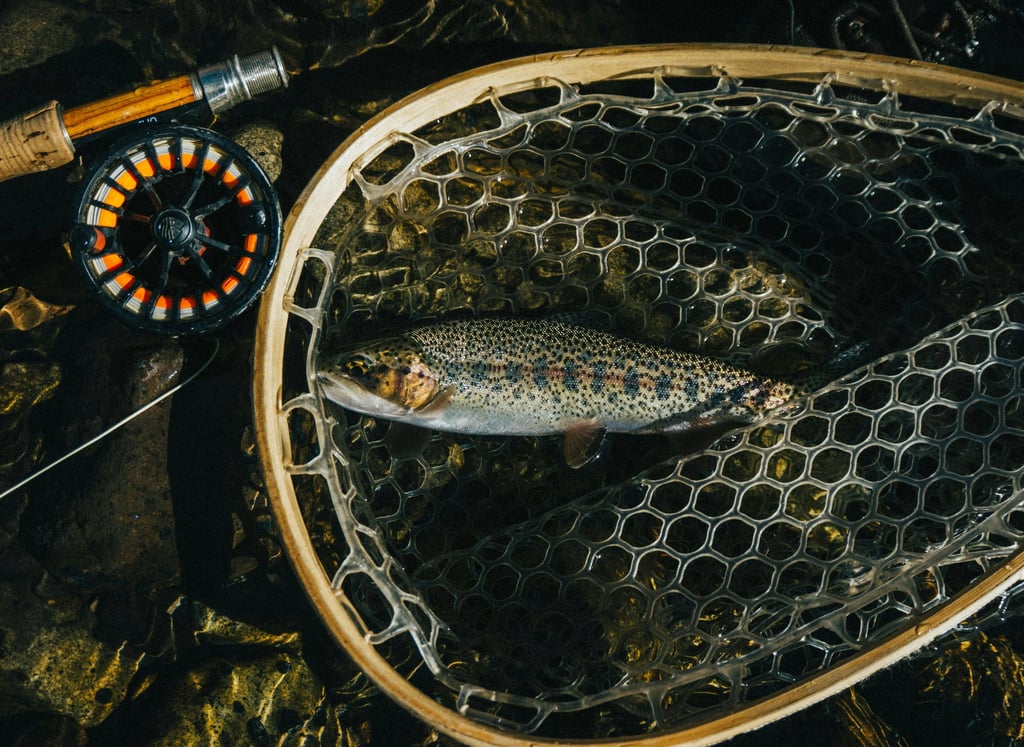
If you fish for trout or predators like largemouth and smallmouth bass, chances are you've stood at the river or lake, weighed down by gear — and gone home with very little to show for it. Sometimes, because you didn't know what to use in that particular moment. Sometimes, because you had everything except the one thing you needed. Because every angler knows the truth: when we don't catch fish, it's never our fault. We simply don't have all the gear we need for every possible situation yet.
And that's the trap. Fishing can quickly become a form of compulsive spending — buying every lure we think we need, including the rare and expensive ones that leave the tackle box once every full moon, because we tell ourselves that one day, with the right setup, we'll catch more fish and bigger fish. More rods too — fly, spinning, casting — when in reality most of our catches come down to the skills we gradually build through patient, quiet practice on the water.
But here's the thing. If you stop and think about it, fishing is — at its core — a minimalist pursuit. A stick, a line, and something on the hook to fool a fish. That's it. That's what drew me to it in the first place.
I remember the first time I went fishing alone. I walked down to the river near my house with an old rod and reel I found at home, a length of line, and two or three spinners I'd bought to try predator fishing for the first time. Until then, I didn't even know spinner fishing was a thing. My only reference was childhood fishing with my father — bread or a worm on the hook, cast the line, wait for something to happen. Slow, quiet, and mostly fishless.
That day was different.
It was the first time I caught a fish of any real size. A brown trout, roughly the length of my forearm. I remember exactly what I was using — a gold spinner — and I remember that I was about to give up. I'd been there for nearly three hours. I could see two or three fish moving through the water occasionally, though I had no idea what species they were. Nothing had taken the lure. I was starting to lose faith.
And then I felt it.
A pull. Sudden and unmistakable. The reel started giving line like something on the other end was pulling hard in the opposite direction — now looking back I think my drag might have been too loose — I couldn't quite believe what was happening. But it was happening: I had a fish on.
I started reeling. Within seconds, it was there in front of me.
A brown trout. My first brown trout.
That was the moment fishing got me. Properly got me. Enthusiastic enough to start buying different lures, testing what works and what doesn't — and after a few years of spending money on things that worked and things that absolutely didn't, I came to understand something: fishing can get as expensive as you allow it to be.
Which is exactly why I'm writing this. Because I genuinely believe that predator fishing — trout, largemouth bass, smallmouth — can start remarkably simple. One light or ultralight rod. One modest reel. Three spinners.
That's it. That's enough to begin.
With that said, here are a few gear suggestions for anyone thinking about getting into fishing without breaking the bank.
A quick note before we get into it: the links below are affiliate links. They help keep The Grit Letter going, but they're suggestions — not a shopping list. If you already fish and have gear at home, chances are you can build a perfectly good minimalist kit with what you already own. The goal isn't to make you spend money. It's to help you spend less time thinking about gear and more time on the water.
One more thing worth mentioning: I'm a firm believer in Japanese fishing tackle. The engineering is precise, the quality-to-price ratio is hard to beat, and the gear lasts. Which is why my first recommendation starts with a Japanese brand.
The Rod: Daiwa Spinmatic-SMD.
The Spinmatic has been around long enough to prove itself on rivers across Europe, and for good reason. It's light enough to fish all day without your wrist giving up on you, sensitive enough to feel the lightest take, and robust enough to handle a decent-sized predator when one shows up unexpectedly. The action is fast and responsive — exactly what you want when you're working spinners through current or around structure.
For the price, I think you can't go wrong with this one.
The Reel: Daiwa Crossfire LT Spinning Reel
The Crossfire LT is what a fishing reel should be (at least for me) — light, smooth, and reliable without asking you to spend a fortune to get there.
The LT in the name stands for Light and Tough, and Daiwa delivers on both. The AIRDRIVE design reduces friction through the entire retrieve, the Digigear system keeps everything smooth cast after cast, and the ATD Type-L drag is sensitive enough to protect light lines when a trout runs harder than expected. The LC-ABS spool reduces line memory — which matters more than most beginners realise when you're casting lightweight spinners at distance.
The best part? It's small and light enough to not become cumbersome on the water. Pair it with the Spinmatic rod and you have a setup that punches well above its price point.
The Lures:
This is where most anglers overspend. The truth is that for trout and light predator fishing, three well-chosen spinners will cover the vast majority of situations you'll encounter on the water. Take my own tackle box as evidence. At this point I own a bit of everything — big spinners and small ones, crankbaits, chatterbaits, Rapalas, jigs, spoons, soft plastics, store-bought and homemade. And I'd estimate that 90% of the fish I actually catch come on the simplest spinners in the box.
I can't give you a scientific explanation for that. But there's something predatory fish can't seem to resist about a small piece of shiny rotating metal vibrating through the water. Whatever instinct it triggers, it works. It has worked for decades. It will probably keep working long after every new lure design has come and gone.
There's another reason spinners belong in every minimalist kit: they require almost no technique to fish effectively.
Cast, retrieve at the right speed, repeat. No animations, no jerks, no special presentation. You're not trying to imitate a wounded baitfish or time a pause to the millisecond. The spinner does the work. Your job is simply to keep it moving at the depth and speed that puts it in front of a fish.
For a beginner, that's everything. For an experienced angler, it's a reminder that sometimes the simplest approach is the right one.
That said, not all spinners are created equal. I've fished cheap ones and quality ones, and the difference is real — in the blade rotation, the vibration, the finish, and ultimately in the number of strikes. These are the three suggestions I keep coming back to.
The Mepps Aglia is probably the most proven trout spinner in existence. Anglers have been catching fish on it for decades across rivers and lakes on every continent. The dressed treble adds movement and colour at the tail that triggers strikes even on slow retrieves — useful when the water is cold, and the fish are lethargic. Start here if you start anywhere.
Blue Fox Classic Vibrax — Blade Size 3, Gilded Brown Trout
Where the Mepps is subtle, the Vibrax is loud. The in-line spinner design eliminates line twist — a persistent problem with standard spinners — and the Vibrax blade produces a distinctive vibration that fish detect from a distance. The Gilded Brown Trout finish works particularly well in clear water with good light. Size 3 sits in the sweet spot between casting weight and presentation — light enough for trout, substantial enough to interest a smallmouth bass.
Blue Fox Super Vibrax Tri-Pack
The same proven Vibrax action, but in a pack that gives you three essential finishes at once — gold, silver, and rainbow trout. Between those three, you have a spinner for almost every light condition and water clarity you'll encounter.
Gold works in low light and coloured water. Silver is your go-to in bright conditions and clear rivers. The rainbow trout finish sits between the two — natural enough for pressured fish, flashy enough to trigger a reaction strike.
Buying the tri-pack also means you're covered when you lose one to a snag or a fish that runs into the rocks and takes your lure with it. Because, let's face it, it will happen.
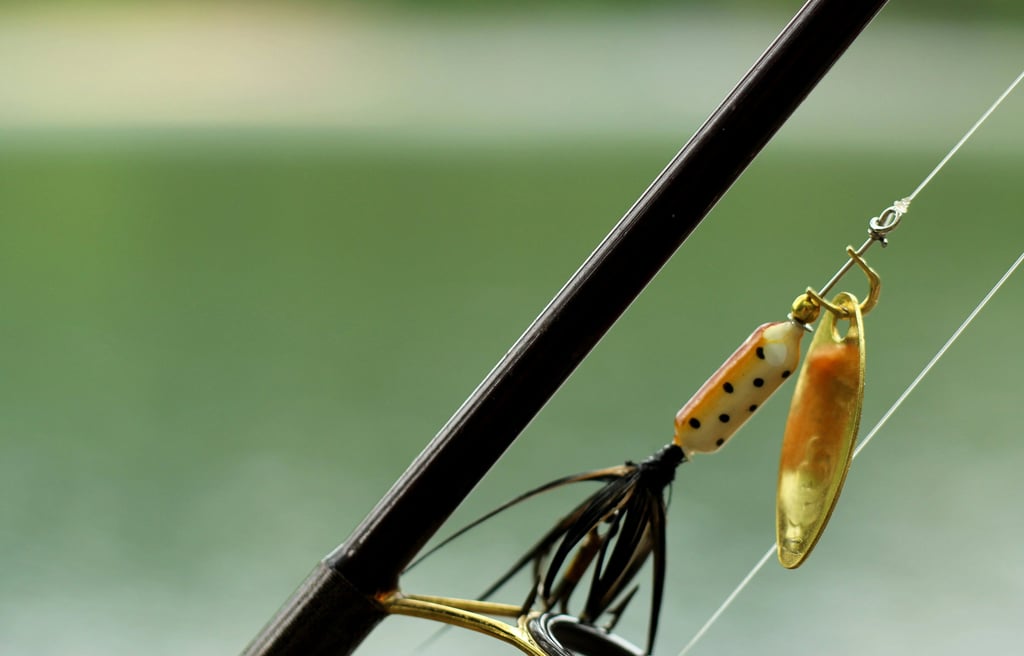
That's the kit. With these three spinners, one rod, and one reel, you have everything you need to spend a serious day on the water.
A couple of small additions worth mentioning: good line matters more than most beginners expect — it affects casting distance, sensitivity, and how the lure behaves in the water. And personally, I fish with snap swivels. They make changing lures quick and effortless, which means less time with your hands in the tackle box and more time with the spinner in the water. Some anglers argue that they spook fish. In my experience, you'll catch plenty regardless — just make sure they're strong enough to hold and small enough to be discreet.
Keep it simple. Get to the river. The rest figures itself out.
Subscribe to our newsletter
Be a part of the grit lifestyle