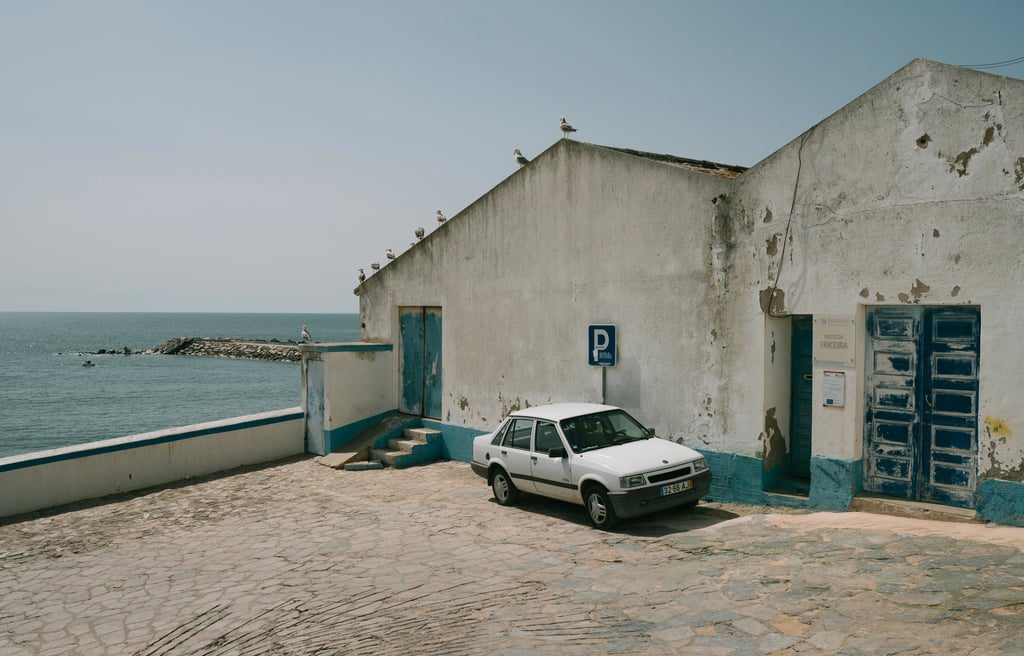
My father drives a 1998 SEAT Inca. He uses it for work, which means it has been used hard — worn interiors, tired trim, the kind of honest fatigue that comes from decades of daily use rather than neglect. From the outside, it looks like a car that should have been retired years ago.
The engine, however, has other ideas.
In twenty-eight years of existence and rough daily use, the van has required only two types of interventions: brake pads and battery changes. That's it. No oil changes. No filters. My father and his business partner only remembered that engine oil was something that needed changing when they took it in to replace the timing belt around two years ago, also for the first time.
The car is still running.
This got me thinking. Because in Portugal, this is not a remarkable story. It's a common one.
Drive through any Portuguese town and you'll find them — SEAT Ibizas from the early nineties, Opel Corsas of the same era, Renault Clios with original paint and six-figure mileage on the clock. Cars from manufactures that are not remembered as the most reliable, still being driven daily by people who simply never got the memo.
Portugal is not a wealthy country. The Portuguese are not, on average, among Europe's most prosperous and from that economic necessity comes a particular relationship with machines.
Especially older people have the habit of keeping what works. Fixing what breaks. Not replacing something because a newer version exists. And somewhere in that frugality, something interesting happens: the cars that were never supposed to last become the ones that last the longest.
They're slower than a new car for sure. But they cost a fraction of the price. And according to their owners, they simply don't let you down, covering twice the mileage before anything serious goes wrong, maintained by mechanics who know every bolt by name because they've replaced most of them at least once.
There's something worth understanding here. Something about reliability that the car industry doesn't want to talk about, because the car that never dies is also the car that never needs replacing.
Talk to the owners of these cars long enough and something shifts. What starts as a conversation about mileage and maintenance becomes something else entirely. A story. A relationship. The kind of quiet pride that comes from owning something that simply refuses to quit.
These cars operate on a different philosophy to anything built in the last fifteen years. No mandatory service intervals, most dashboard warnings are usually ignorable to some extent, no subscription-based diagnostics. The philosophy is simpler: petrol and road. Drive it, use it, and deal with problems when they actually arrive, because when something does eventually go wrong, it will almost certainly be something a competent mechanic can fix comparatively quickly without specialist software or manufacturer approval.
To be clear, this is not an argument against modern cars.
The progress the automotive industry has made in the last two decades is genuinely remarkable to watch if you care about cars. Engines with more power and better efficiency than anything that came before. The return of classic aesthetics blended with modern design language. Iconic sports models back in production — and before anyone asks, I'm deliberately not including the Ford Mustang Mach-E or the electric Capri in that category, for reasons that should be obvious to anyone who understands what made those names mean something in the first place. The current market, from certain manufacturers at least, is an exciting place to be.
For daily driving or long journeys, a modern car is almost always the better choice. I've driven both new and old. The convenience gap is real and a well-worn 90hp Audi 80 from 1992 is never going to close it (keeping in mind that 40 out of those 90 horses are dead by now).
This article isn't about that.
It's about longevity. About a particular kind of mechanical consistency that is becoming increasingly rare in the modern automotive world.
The honest truth is that most contemporary cars, complex, software-dependent and engineered to tight tolerances with proprietary components, are unlikely to cover the kind of mileage these old machines accumulate on minimal maintenance and hard daily use. They're better in almost every measurable way. But they're not built for this. They were never meant to be.
The SEAT Inca with only one oil change and half a million kilometres on the clock isn't impressive because it's a good car. It's impressive because something about the combination of simplicity, necessity, and some neglect produced a result that no engineer planned for.
It's still driven every day. It still starts. It doesn't complain on cold days, and it still gets the job done when it matters. The trim is worn, the interior is tired, and none of that is the point.
The point is that it's still there.
Nobody engineered this. Nobody planned for it. It just happened — the result of simplicity, necessity, and a particular kind of stubborn daily use that modern cars were never designed to survive.
And that's a story worth telling.
Subscribe to our newsletter
Be a part of the grit lifestyle